

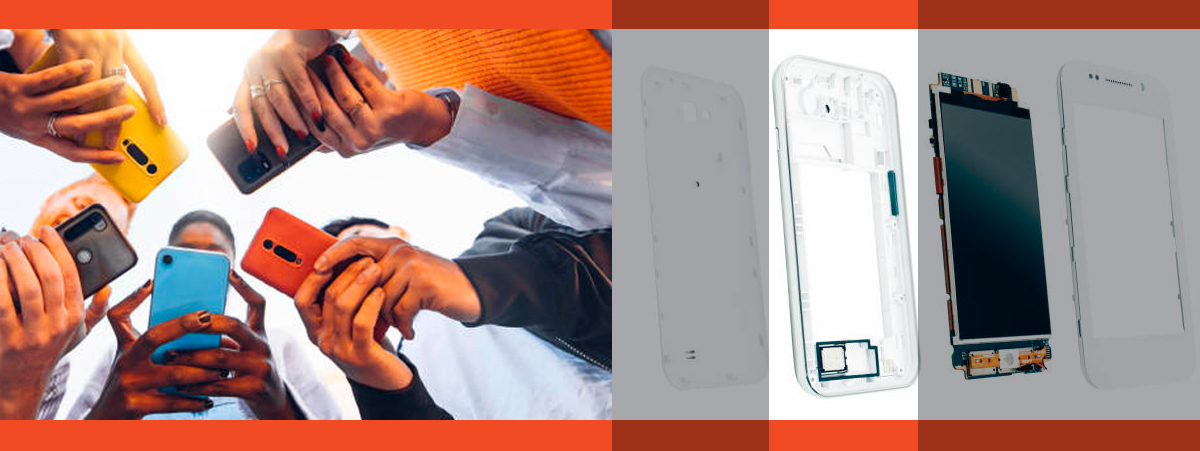
Injection Molding Success Story
Custom Injection Molding Company Uses FortiPhy™
PVD Tool and Die Coating for Improved Mold Release and Corrosion
Resistance
UltraEndurance™ coatings from Phygen are improving
release properties and extending the life of plastic molds,
even on some hard-to-maintain textured surfaces. Custom applications
of Phygen's patented FortiPhy™
ultra-endurance coatings have resulted in better release properties,
better-quality molded parts, and lower maintenance costs.
Intesys is a large-scale custom
injection molder as well as an innovative designer and manufacturer.
With facilities located throughout the United States, South
America, and Europe, Intesys serves the high-growth wireless
communications, computer, and medical supply industries with
engineered plastic and metal assemblies. (Your cell phone
housing probably was molded using an Intesys process.) Intesys
is a division of Textron, Inc., one of America's largest multi-industry
companies.
Kenny Aldrich, manufacturing engineer,
has more than 20 years of experience as a plastic molding
specialist. He develops production processes and designs tooling
to meet two major goals at Intesys: ensuring manufacturability
and reducing tooling costs. His expertise keeps him busy,
often on the road, fine-tuning the production processes at
several Intesys production facilities in the United States
and Mexico. Frequent problems with a customer's difficult,
textured cell phone-housing mold started him searching for
a way to increase mold life and still preserve the fine textured
surface required for his customer's finished parts.
When a plastic part requires a textured surface, Aldrich
typically calls for an EDM process to “spark” the required
pattern into the mold cavity. The resulting micro-texture
breaks up the glossy surface and produces a part with a nice
matte finish and good “feel” in the hand. If the texture wears
out of the mold, the look and feel of the finished parts change,
with unacceptable variations from the beginning of a production
run to the end.
The problematic cell phone housing, which specified a typical
VDI 20 texture, was molded from an advanced thermoplastic
for extra strength and impact resistance. “While it is very
tough, this material also is very abrasive and hard on mold
surfaces,” says Aldrich, “This hot, abrasive material was
wearing out the texture details after only 200,000 to 300,000
shots, well below the 1,000,000 shots we typically consider
our minimum acceptable mold life.”
When molds need to be reworked, production can stop for
up to four days. The cost of “re-sparking” the texture, rebuilding
the molds, and realigning the press can approach one-half
of the cost to build the original mold. Before the line can
be restarted and brought back into production, sample parts
must be run, inspected, and sent to the customer for approval.
As maintenance costs and expenses add up, production rates
and profits go down. Says Aldrich, “We really work hard to
reduce our customers' tool costs. In this case, we needed
better wear resistance to protect the textured surfaces of
the mold from the abrasive material and keep the production
line running longer between repairs.”
Intesys began experimenting with coatings, without much
success. Aldrich explains, “We used plenty of different coatings,
including a commercial CrN coating which gave us horrendous
sticking problems.” Finally, he contacted Dave Bell of Phygen
for a solution.
“Rather than take down a running machine, we suggested that
Intesys send us a test piece or prototype mold,” Bell says.
“We fine-tuned our process for the exact contours of the micro-texture
and sent the coated parts back for testing.”
Phygen applied a customized, super-thin layer of FortiPhy
coating to the working surface of the molds. After setting
up the mold and making a few production runs, Aldrich liked
what he saw. There was no sticking problem, and thanks to
the thin, conforming coating layer, the required surface texture
was preserved. After proving that FortiPhy was the right coating
for this surface, Intesys sent a few sets of production molds
to Phygen.
In production, one mold went more than 415,000 shots. Another
produced more than 1,100,000 parts that met the surface texture
requirements. Aldrich says, “We would have been well into
a second set of molds at that point, and heading for a third.
Phygen's coatings solved the wear problem, without the release
problems of other coatings.”
In addition to reducing wear, Aldrich discovered that FortiPhy
also prevented adhesion of the “plate out” and other buildup
that typically is caused by resin additives and byproducts.
This kept the mold looking new throughout the production run,
with no sign of corrosion or discoloration.
The key to FortiPhy's exceptional toughness, low coefficient
of friction, and corrosion resistance is its uniform, nanocrystalline
structure. Phygen’s patented plasma acceleration process improves
upon traditional PVD to produce the most uniform coating deposition
layer possible, with exceptionally high adhesion. Having solved
the uniformity problems inherent in the PVD processes of the
past, Phygen can apply thinner coatings that outperform thicker,
less-uniform coatings. In addition, Phygen's coatings are
applied at much lower temperatures. Low-temperature processing
and thinner coatings help keep critical tool dimensions within
tolerance, without the costly rework of other processes.
Intesys started slowly, with a test of FortiPhy
low-temperature tool and die coatings on a sample mold.
Successful testing convinced them that FortiPhy really is
different. Their production numbers continue to prove that
FortiPhy coating increases mold life, even in the finest detail
areas. Intesys plans to use FortiPhy coatings on future molds,
wherever wear problems have to be solved.
|